
Sweep Net Scouting Videos

Sweep nets are one of the simplest and most reliable tools for monitoring insect activity in Prairie crops. By collecting insects from the canopy, growers can estimate pest pressure, identify beneficial insects, and make informed decisions about spraying.

These short videos feature Dr. Meghan Vankosky, Research Scientist with Agriculture and Agri-Food Canada and lead of the Prairie Pest Monitoring Network. She explains how sweep nets help you spot pests before they cause yield loss, how to use them effectively, and what to look for in your samples.
Why use a Sweep Net?

Scouting helps catch pest problems early and protect yield. A sweep net gives a quick picture of the insects in your field, including both pests and beneficial species.

Dr. Meghan Vankosky explains how sweep net data connects to economic thresholds, the point where pest numbers may justify control. She also highlights why holding off on unnecessary sprays helps protect beneficial insects and maintain overall field health.

Watch the Why use a Sweep Net? sweep net video and download the Cereals, Oilseed and Pulse scouting guides.

How to Sweep a Field

Using a sweep net takes only minutes and can reveal valuable information about pest levels. Dr. Vankosky demonstrates how to walk through the crop, swing the net in a 180 degree arc, and collect samples from several spots across the field. She also shares tips on choosing calm weather and focusing sweeps on the part of the canopy where target pests are likely to be found.

Watch How to Sweep a Field for step-by-step guidance.

What’s in Your Sweep Net?

Once your sample is collected, it’s time to see what’s inside. Dr. Vankosky shows how to sort and count what you’ve caught, identify common beneficial insects, and compare pest numbers against economic thresholds. Her key message: not everything in the net is a problem. Many insects you collect help keep pest populations under control.

Watch What’s in Your Sweep Net to learn how to interpret your results and spot the helpers in your field.

Identify What You Find

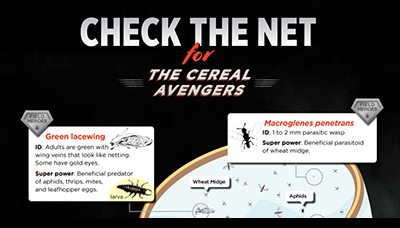
After you’ve used a sweep net in your field, these quick reference sheets can help you identify what’s in your sample. Each guide shows the beneficial insects most likely to appear in Prairie cereal, pulse, and oilseed crops, along with notes on what they feed on and how they help manage pests.

Use these sheets alongside the sweep net videos to confirm what you’re seeing in your net. Recognizing beneficial insects lets you make informed decisions about when to spray and when to let nature take care of the problem.

CEREALS

Identify the lacewings, lady beetles, ground beetles, and parasitic wasps commonly found in cereal crops such as wheat, barley, and oats.

OILSEEDS

Find key pollinators and predators in oilseed crops like canola and sunflower, including bees, rove beetles, and parasitic wasps.

PULSES

See which beneficial insects are most active in pulse crops, from hover flies and lacewings to minute pirate bugs and ground beetles.

Want to receive timely, regional information about insects? Subscribe to updates from the Prairie Pest Monitoring Network.

Subscribe